Topics
Diamond Education
Before committing that sweet "yes" to a diamond, discover what makes it perfect in the first place. This is your handy guide to learning everything there is to know about diamonds in less than 10 minutes.
Types of Diamonds
Diamonds are classified by their make, as the purest and the most valued ones are completely made of carbon.
Natural Diamonds
- Mined from the earth and have a geological origin
- Billions of years of intense heat and pressure caused the element of carbon to rearrange on an anatomic level and thus take on the solid form of a diamond
- Considered as excellent investment as it increases in value
- Expensive
Lab-Grown Diamonds
- Grown in a laboratory and are engineered to be chemically, physically, and optically identical
- They also exhibit the same fire, scintillation and sparkle as natural diamonds
- Option to cut down on costs
- Mining-free alternative
Treated Diamonds
- Mined and found to grade poorly in color and clarity
- Artificially enhanced through different methods to make them more appealing
Lab-Grown Moissanites
- Gemstones that grow in laboratory with similar fire and brilliance to a diamond
- Substantially more affordable than natural and lab-grown diamonds
Types of Laboratories
There’s usually talk about diamond certificates and grading reports. These are the crucial documents that determine the quality, value, and complete characteristics of a gem. Before we get there, we would first like to segue into the authoritative bodies that issue them.
These certificates also inform the underlying authenticity of a diamond, therefore making it indispensable when considering legitimacy.
GIA
Gemological Institute of America
“Leading gemological laboratory in the world.”
It’s widely recognized by many experts, from scientists to educators to diamond graders and thus is considered the highest standard in gem grading.
Offers training services and research programs in this field of luxury.
AGS
American Gemological Institute
The second most utilized grading system in the U.S. market.
It rates its diamonds from 0 thru 10, with 10 as the lowest grading.

It’s popular for its stricter standard and an assessment that measures the light performance of a diamond.
EGL
European Gemological Laboratory
Renowned for its grading technique for stone weighing less than one carat and introducing an SI3 clarity rating.
When compared against the GIA grading, a diamond is one to two grades lower on the EGL report.


HRD
Hoge Raad voor Diamant
Issues certificates and diamonds primarily in Europe.
They average an estimated one color and/or clarity grade lower compared to GIA grading.
IGI
International Gemological Institute
Grading polished diamonds on a wide scale and grading synthetic diamonds.
Similar to the EGL, a diamond’s color and clarity are one to two grades lower when compared to the GIA report.
Explore Diamond Colors
An expert eye can tell the color of a diamond, which can greatly affect its rarity and worth.
Diamonds are seldom colorless and natural colorless diamonds are extremely rare. The color variations are as subtle as they come, and it takes a trained eye to determine the difference, as even the slightest hint of color can impact a diamond’s price.
Using the GIA Color Scale, diamonds are graded by how colorless they are, with D equivalent to colorless and Z equivalent to light yellow, brown, or gray.
In determining the color grade, diamonds are examined in controlled environments and compared to round brilliant diamonds known as masterstones.
The Diamond Finery offers diamonds from the D-to-Z color scale.
GIA Color Scale
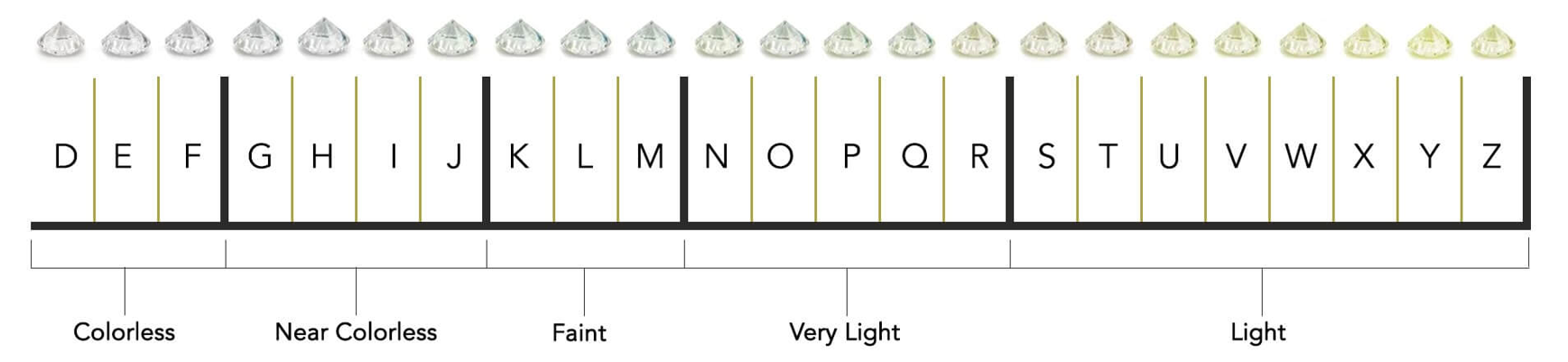
Reference: https://4cs.gia.edu/en-us/diamond-color
Colored Diamonds
Yellow
Brown
Red
Green
Purple
Orange
Pink
Blue
- Colored diamonds are more valuable than the colorless variants.
- Some diamonds may have brown or green tint.
- Some may appear clear under normal lighting conditions but could turn hazy or may have an oily appearance when exposed to sunlight or UV light.
- These characteristics are not identified in certificates and are not easily recognized by untrained eyes.
- These diamonds are 30-40% lower in price but may have a negative impact on the overall look.
The famous Hope Diamond is an example of a fancy colored diamond.
Diamond Color Comparison
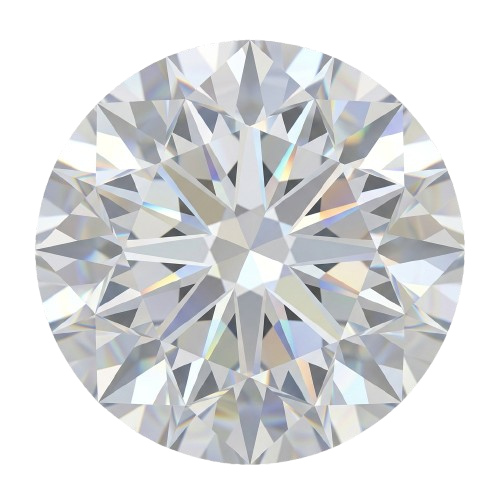
Colorless
D Grade
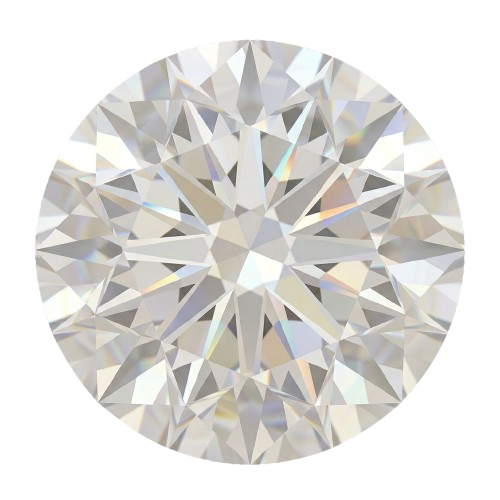
Near Colorless
G Grade
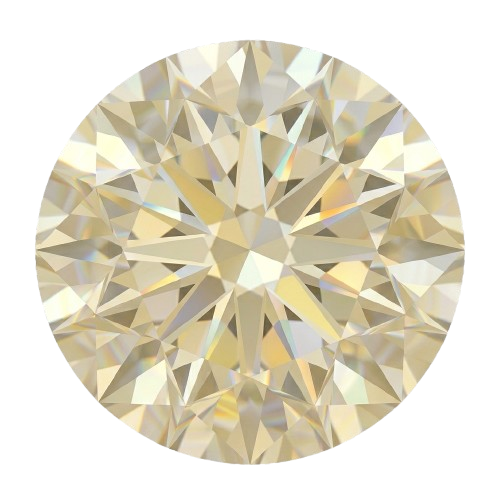
Near Colorless
J Grade
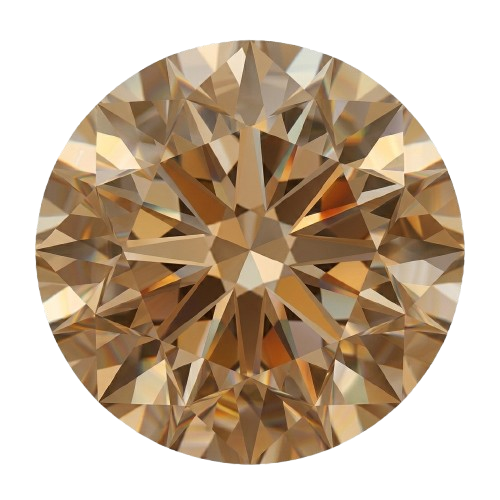
Brown
J Grade
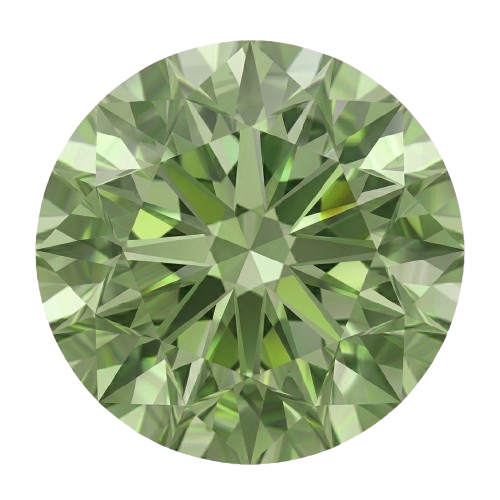
Green
J Grade
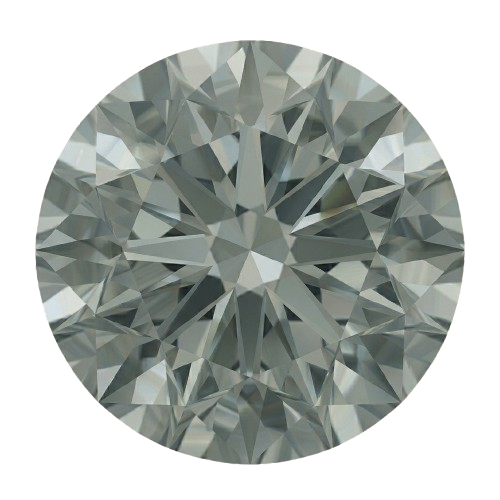
Grey
J Grade
Hazy Diamonds
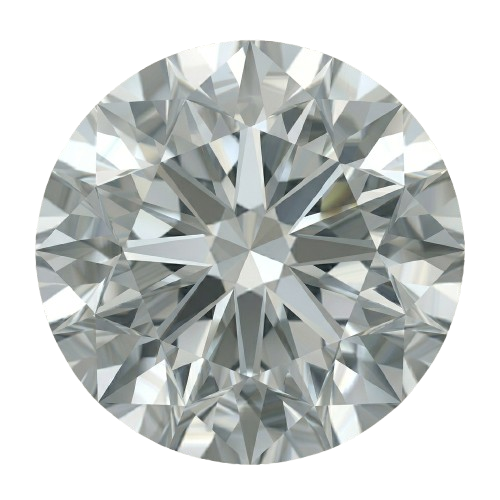
Non-Milky
Clear Diamond
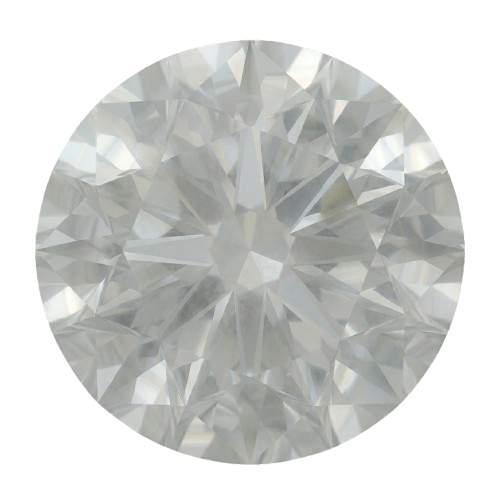
Slightly Hazy
Slight Milkiness
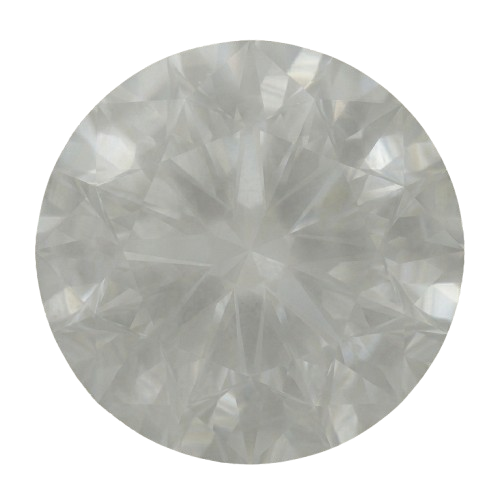
Milky
Hazy
- We guarantee that all diamonds found across our website are non-brownish, non-greenish and are never milky.
- If you're working with a lower color grade (K and below) and you want to hide the yellow tinge, we recommend pairing it with yellow or rose gold.
Explore Diamond Clarity
Parallel to a diamond’s cut, its clarity also contributes to its shine and brilliance. Essentially, the clarity of a diamond is the absence of inclusions or blemishes—imperfections or surface irregularities.
Blemishes are the external scratches, while inclusions are found within. Together, they make up a stone’s clarity characteristic and can help jewelers identify one diamond from the other.
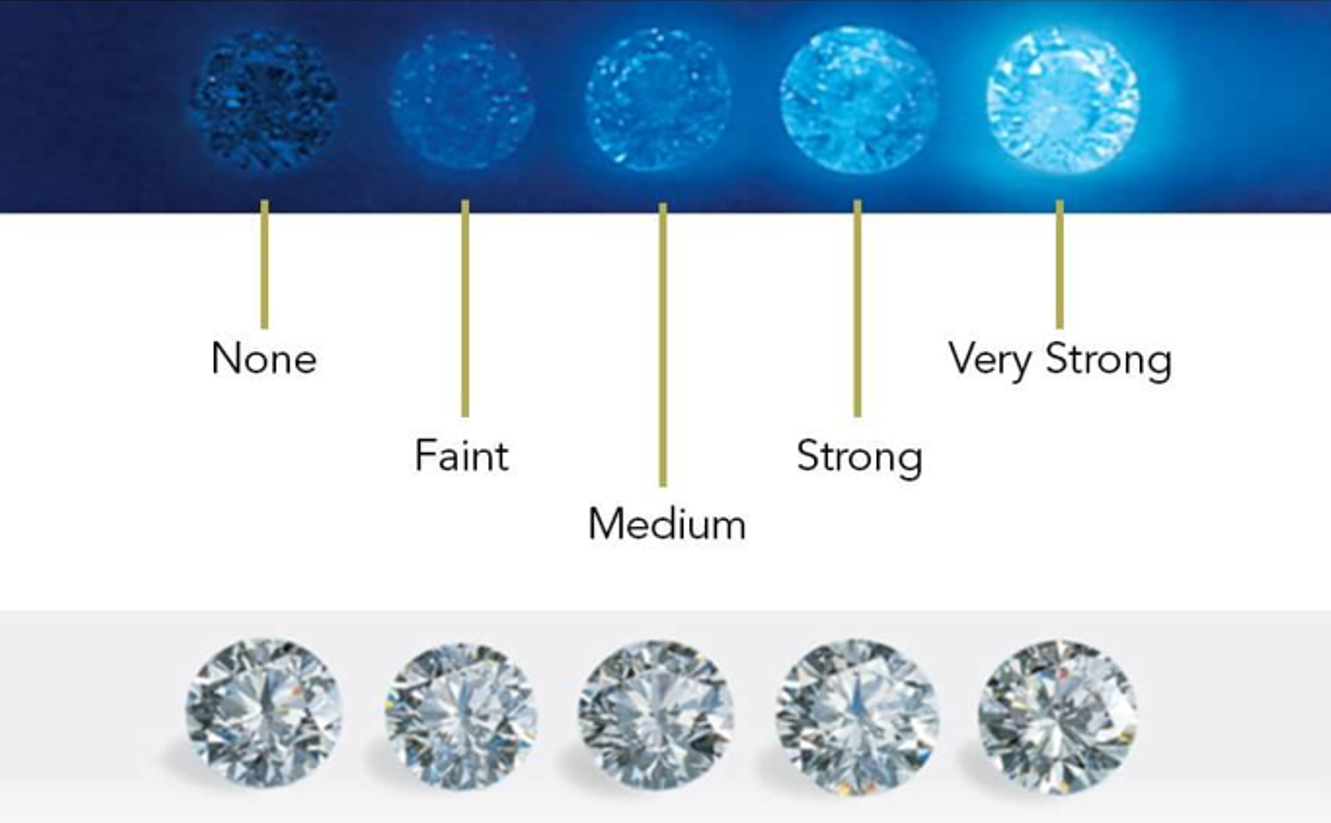
Another issue that can affect a diamond’s clarity is its fluorescence, which when measured Strong or Very Strong, may cause the diamond to appear oily or hazy.
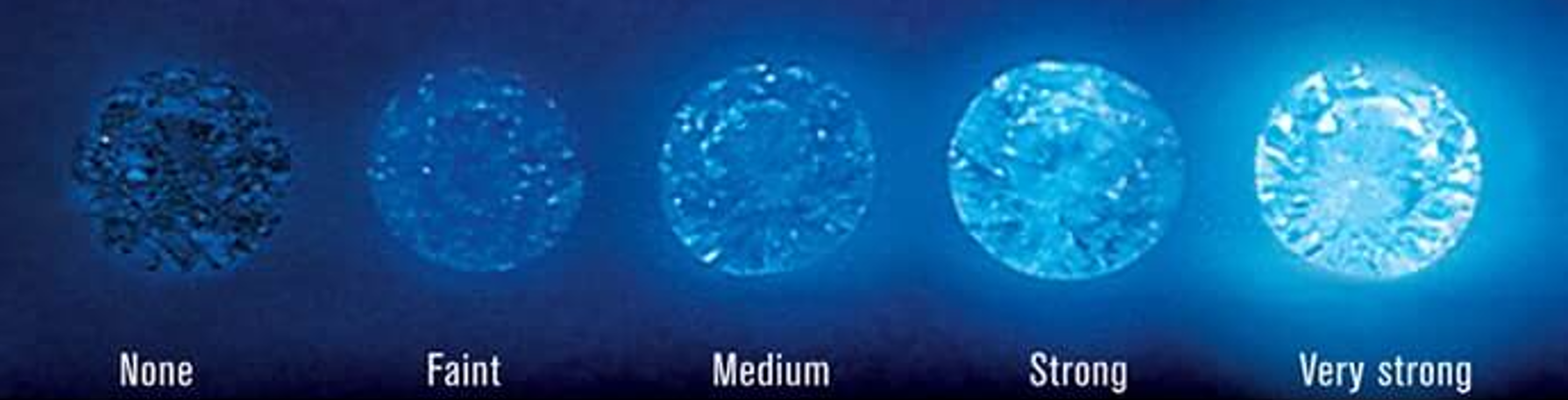
Reference: https://www.gia.edu
How are diamonds graded according to clarity?
The GIA has prepared another handy system called the clarity scale, with eleven levels plotted on the scale where grades range from Flawless to Included.
A flawless diamond is rare and will come with a premium price tag.
You may notice that diamonds with grades VS2 and higher are whiter or have fewer “eye-clean,” which means that the inclusions or flaws are difficult to discern with the naked eye and require a loupe or microscope at 10x to 20x the magnification.
At The Diamond Fiery, we recommend the finest diamonds from ranking SI1 and above.
What you see under 10x magnification
IF
VVS1 - VVS2
VS1 - VS2
SI1
SI2
I1 I2 I3
What your eyes will see without magnification
IF
VVS1 - VVS2
VS1 - VS2
SI1
SI2
I1 I2 I3
GIA Clarity Spectrum
FL
Flawless
No inclusions visible when magnified 10 times.
IF
Internally Flawless
No inclusions visible when magnified 10 times, tiny blemishes on the surface of the diamond.
VVS1 | VVS2
Very Very Slightly Included
Tiny inclusions and blemishes visible to a trained grader when magnified 10 times.
VS1 | VS2
Very Slightly Included
Minor inclusions and blemishes are easy to spot when magnified 10 times.
SI1 | SI2
Slightly Included
Inclusions and blemishes are easy to see when magnified 10 times, sometimes even visible to the naked eye.
I1 | I2 | I3
Included
Inclusions and blemishes are visible to the naked eye. Diamonds are so included that their brilliance and durability are affected.
Diamond Shape and Cut
Diamond shapes are the different styles one can look at when thinking of the design of their jewelry.
While you won’t find this characteristic among the 4C’s, it’s one that many prioritize when looking for their dream diamond.
Diamond Shapes

Round Brilliant

Princess

Emerald

Oval

Radiant

Pear

Marquise

Heart

Asscher

Cushion
One of the most sought-after shapes is the round brilliant for its traditional and classic aesthetic. But depending on what look you want to achieve with your jewelry piece, the shape and cut will play major roles in making this happen.
Diamond Cut Grade
Learn how diamonds get their brilliance and interact with light.
Of all 4C’s, the diamond’s cut might be the most difficult to analyze. It’s common for the cut of a diamond to be mistaken for the shape.
In grading the cut, the jeweler calculates the proportions that influence the appearance of a diamond when it’s examined from the top.
It’s then marked by:
A Short Background on Shape and Cut
The art of diamond cutting dates back to the 14th century. Early cutters used primitive tools to shape rough stones, gradually evolving into the precision laser and bruting techniques used today. Modern cuts are optimized using light performance analysis software.
To go through each popular diamond shape, we've detailed the characteristics of each fancy shape and their ideal qualities.
The Round Brilliant Cut Diamond
The round brilliant cut is well-known and beloved for its classic aesthetic and its ability to produce the best sparkle among its counterparts. The unparalleled brilliance of a round diamond makes it good at concealing inclusions and yellow tinges.
Finding the Perfect Round Diamond
Sparkle
Carefully engineered to produce the maximum sparkle compared to other cuts.
Color
The advantage of getting a round diamond is that its brilliance may conceal yellow tinges or inclusions, allowing you to get a diamond in a lower color or clarity grades.
Cut
A diamond's cut grade tells how well it was cut, from a rough crystal to a finished gem. The cut grade covers how much light the stone reflects as well as its fire, and sparkle. It's the most important contributing factor to a diamond's beauty.
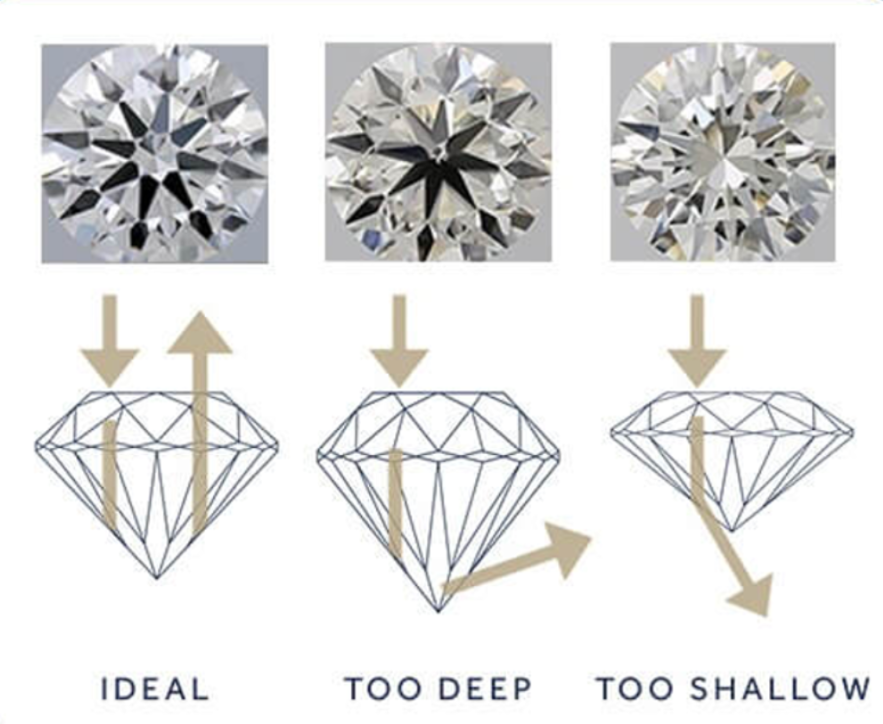
Carat Size
Best at 1-ct and up.
Cost
Round brilliant cut is the most expensive diamond shape.
Symmetry
Symmetry is the measure of the arrangement and conformity of the facets in a finished diamond, although not all diamonds may be cut symmetrically. On the GIA certificate, this is rated from Excellent, Very Good, Good, Fair or Poor.
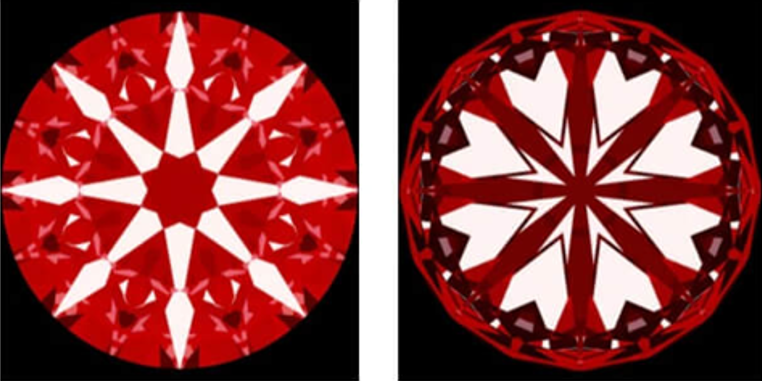
Reference: https://iigindia.com/blogs/iig-international-institute-of-gemology-beyond-4cs-hearts-arrows/
Specific to a round brilliant, symmetry is measured by a concept called hearts and arrows, which may be evaluated through a cupid's loupe.
The Princess Cut Diamond
The princess cut is characterized by a square shape, sharp corners, and exceptional brilliance, second to that of the round diamond.
Finding the Perfect Princess Cut Diamond
Sparkle
Princess cuts can show exceptional brilliance. However, they still don't live up to the brilliance of round diamonds. So, while princess cuts can have great sparkle, they'll never sparkle better than an ideal round.
Color
We recommend a princess cut diamond with a color rating of at least H to J and VS2 clarity as princess cut diamonds do not hide yellow tinges and inclusions well.
Setting
Diamonds with yellow tinges are best set in yellow gold or rose gold.
Cut
A princess cut diamond with a perfect square shape is more coveted than rectangular ones.
Cost
A princess-cut diamond can cost 30% less than a round of equivalent carat weight. This is because of the octahedral shape of a rough diamond.
When gem cutters split the rough diamond in half, they can cut two princesses with minimal waste. In contrast, round-cut diamonds waste more rough, so they cost more than princess cuts.
Cons
One major consideration when it comes to a princess cut is its durability, as the corners of the diamond may make it prone to snagging or chipping, which is why it should be protected by prongs.
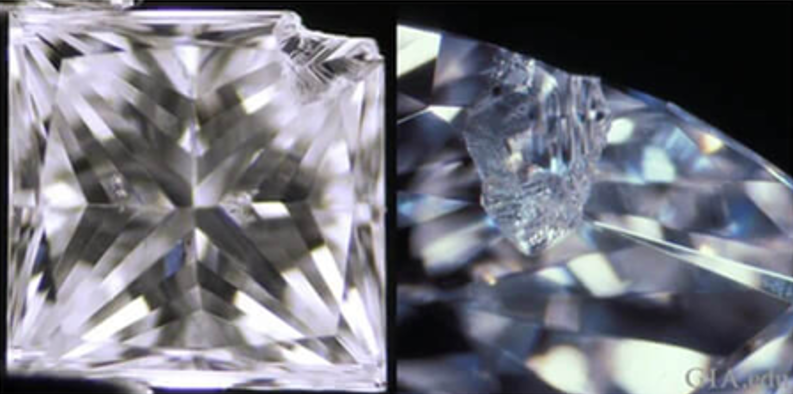
Reference: https://www.gia.edu/
Cushion Cut
The cushion cut is loved for the fire it produces. The cushion cut is sometimes referred to as the "pillow cut" for the obvious reason that its soft edges are fashioned like a square- or rectangle-shaped pillow.
The cushion cut comprises facets and has been experiencing a comeback in terms of popularity lately.
Finding the Perfect Cushion Cut Diamond
Sparkle
Cushion cut diamonds are known to have more fire than rounds.
Proportions
When it comes to cushion cut diamonds, there's never an assigned cut grade from the GIA, so specific proportions are the key to finding your perfect one.
Well cut cushion diamonds with better fire and brilliance tend to have
65-69% Depth Ratios and 60-65% Table Sizes
Color
The way cushions are cut makes the yellowish tinge more visible. At least a G color is recommended for those who'd like their cushion cuts to display an icy white appearance.
Shape
Just as there are different types of pillows, there are variations to the cushion cut which is reflected by the length to width ratio.

1.00 ratio

1.10 ratio

1.15 ratio

1.20 ratio

1.30 ratio
Clarity
Cushion cuts are better at hiding inclusions compared to other shapes.
Cost
20–30% cheaper than round brilliant diamond.
Emerald and Asscher Cut Diamonds
The asscher and emerald cuts have a more subtle and delicate appeal. The emerald cut is an elongated rectangle with corners cut out, while the asscher is a square version of the emerald with truncated corners.
Finding the Perfect Step-Cut Diamond
Sparkle
These step-cut diamonds reflect broad lines and can create a beautiful pattern of light.
Cut
Emeralds and asscher cut diamonds are evaluated by the quality of their step cuts, which give them the ability to reflect broad lines and create a beautiful pattern of light.
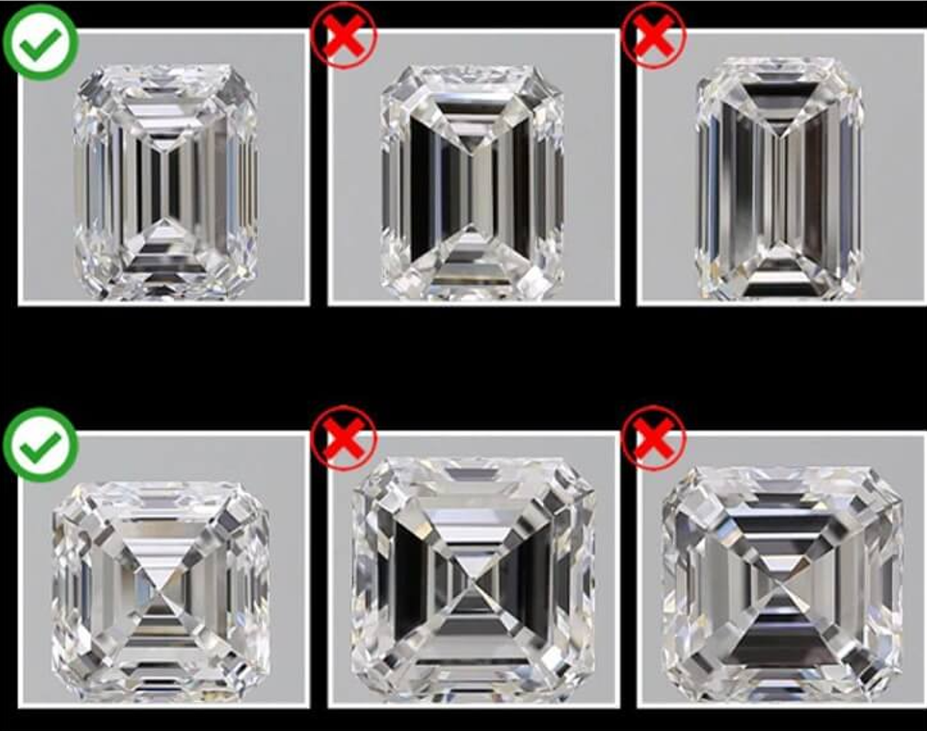
Emerald and Asscher cut diamonds, showing black areas and poor symmetry.
Shape and Size
Check the length to width ratio to help you determine whether you prefer a longer and thinner emerald or a short and stubby one.
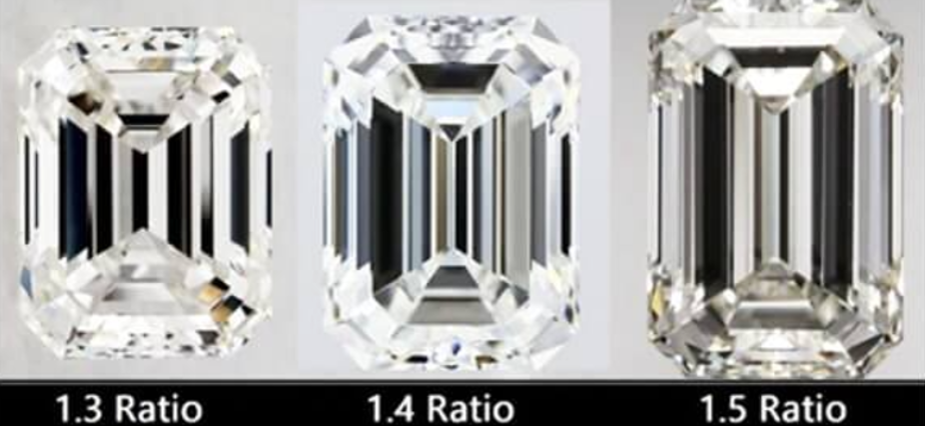
References: https://www.petragems.com/education/emerald-cut-diamonds/
Cost
20-30% cheaper than round brilliant diamond.
Oval Cut
If you're tired of the typical Round Diamond, the Oval Cut is an interesting alternative that's elegant and unique. One of its main draws is that the stones appear larger when faced up than their other counterparts in similar carat sizes. When worn, it may also let its wearer's finger appear longer.
Finding the Perfect Oval-Cut Diamond
Proportion
A diamond's length to width ratio reveals how proportionate it is according to its intended shape (i.e. stubby oval vs. elongated oval). To calculate the length to width ratio:
Ratio = L/W
Example: Ratio = L/W
L = 5.5mm Ratio = 5.5mm/3.5mm
W = 3.5mm Ratio = 1.57mm
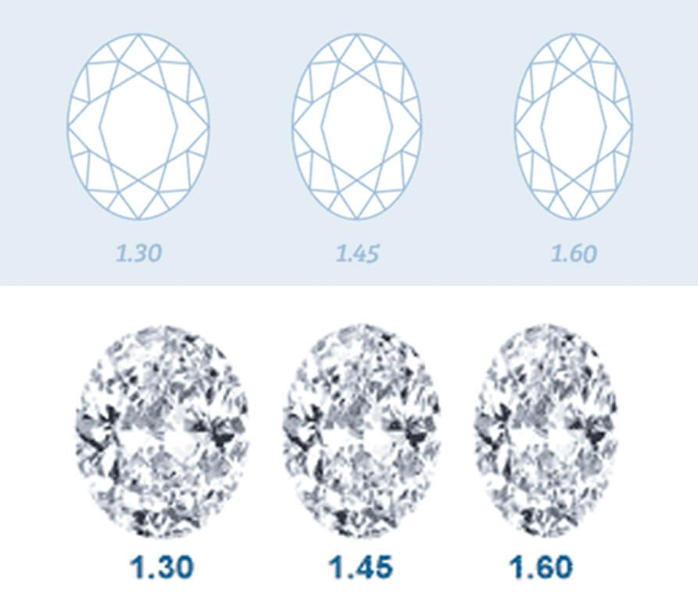
Oval Diamond LW Ratios
Cut
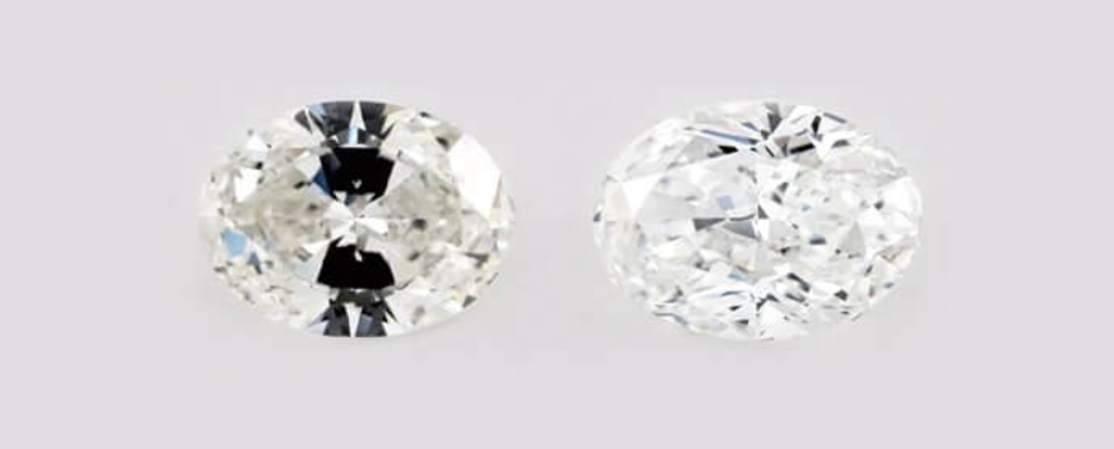
When looking for an oval diamond, try to factor in the light performance, its shape, its contrasting pattern, and what's called its "bowtie," or a dark shadow that runs across the diamond to form what looks like a bowtie. These will all contribute to the cut quality and the overall sparkle of your prospective gem.
Color and Clarity
The beautiful detail about oval diamonds is its ability to hide inclusions so it's acceptable to invest in lower clarity grade. An eye clean oval sits somewhere between VS2 and SI1.
Cost
Given the positive characteristics of an oval diamond, you can buy a larger carat size for less and get a good deal.
20-30% lower than round diamonds due to better yield after the cutting process.
Radiant Cut
The Radiant Cut employs cutting methods from the round brilliant, the Asscher, and the Emerald.
Finding the Perfect Radiant-Cut Diamond
Shapes
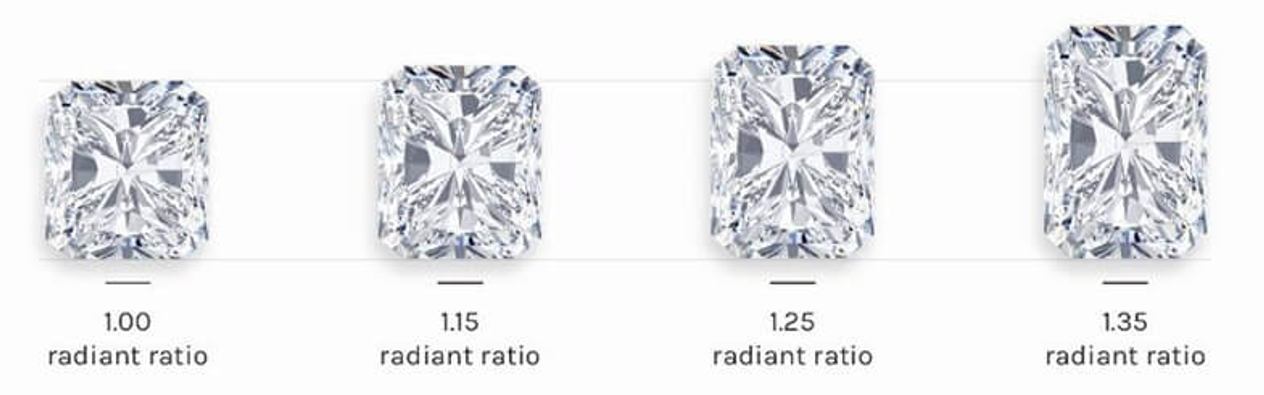
There are two traditional types of radiant cuts: a rectangular one and a square one.
Color
If you're picky when it comes to color, then a Radiant cut with a minimum color grade of G is recommended.
Clarity
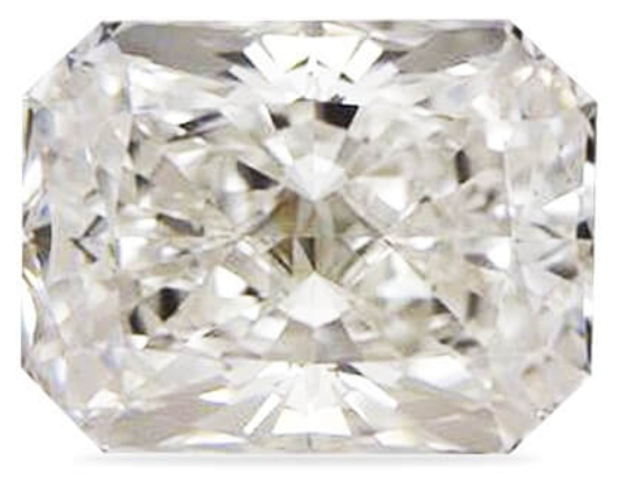
Unlike other fancy shapes, the radiant cut is not as good at concealing inclusions, it would be wise to purchase a radiant cut diamond with at least a VS2 clarity grade.
Cost
25-30% lower than round diamonds.
Pear Cut
Another unique cut is the Pear, a teardrop-shaped cut which combines techniques used in both the Marquise and the Round Brilliant. Pears may look larger for their carat weight as compared to Round Brilliants.
A common question is how the pear diamond should be worn—with the point facing away or toward you.
This should be a personal preference, but traditionally, it is worn pointing away from its wearer.
Finding the Perfect Pear-Cut Diamond
Proportions
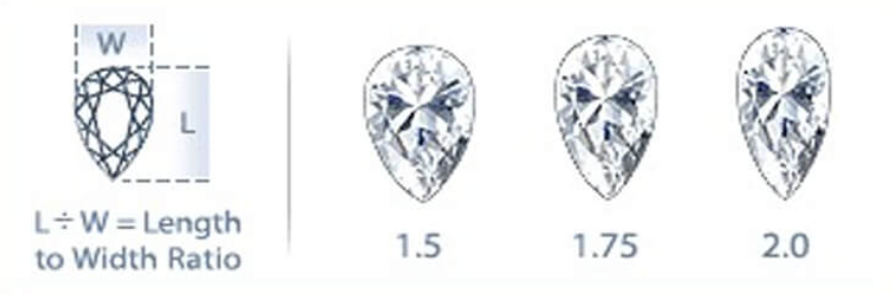
A diamond's length to width ratio reveals how proportionate it is according to its intended shape (i.e. chunky pear vs. elongated pear). The length to width ratio affects the outcome of the pear's visual appearance.
Ratio = L/W
Reference: https://www.tribute.us/pear
Clarity
The pear cut is also great for concealing flaws and inclusions, which means a lower clarity grade isn't a big issue.
Color
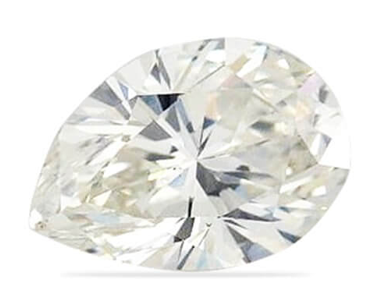
Because of its shape, choosing the color of a pear diamond is different than when choosing for the classic round cut.
Cost
15-30% lower than round brilliant.
Diamond Fluorescence
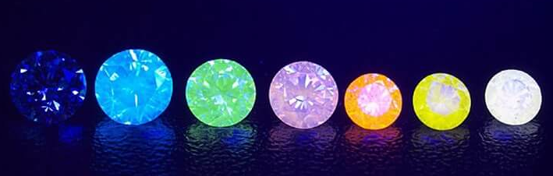
Refers to a diamond’s tendency to emit a soft colored glow when subjected to ultraviolet light (like the sun or UV lamps).
Color may come in the range of green, yellow, white or red.
Reference: http://coloreddiamondguide.com/fluorescence/different-types-of-colors/
15-30% of diamonds exhibit some degree of fluorescence.
Reference: http://coloreddiamondguide.com/fluorescence/different-types-of-colors/
Same stones as seen with ultraviolet lamp (top) and normal lighting (bottom).
Blue Glow
- Most covetable for I to M color grades
- It conceals the yellow tinge, making the diamond look whiter.
- It is less desirable for colorless diamonds (D to F range) as it may cause a hazy or oily appearance.
This haziness or oiliness is more evident in the strong to very strong range. However, it should be emphasized that not all diamonds with strong to very strong fluorescence produce a hazy look.
At The Diamond Finery, we guarantee that our diamonds with strong to very strong fluorescence will never appear hazy nor oily.
The Battle of the Metals: 14K Gold Vs. 18K Gold Vs. Platinum
When you visit The Diamond Finery website, you can expect jewelry set in 14K gold, 18K gold and platinum. Now you might wonder about the difference between these three. First, we define what a karat is. A karat is used to describe the purity of gold, and this is different from carat, which is diamond weight.
Different Color Grade
41.7% (=10/24) pure gold^
Not acceptable for fine jewelry
50% (=12/24) pure gold
Not acceptable for fine jewelry
58.3% (=14/24) pure gold*
Ideal for fine jewelry
75% (=18/24) pure gold
Ideal for fine jewelry
100% (=24/24) pure gold
Too soft for jewelry making
Note:
* 14k gold is the gold grade most frequently used in jewelry making.
^ 10k is the minimum karat limit to be legally considered as real gold in the US.
14k Gold
- Less malleable
- Ideal for incorporating into jewelry with big gems
- Hardy metal and able to withstand moderate abuse during wear
- Made of both gold (majority) and alloy
- Most affordable and is a practical option
Purity
58.33%
Gold vs Alloys
(parts)
14
10
18k Gold
- Heavier than 14K gold
- More luxurious and more expensive
- Softer than 14K gold
- More susceptible to scratches and wear and tear
- Has richer yellow tone
- Its rhodium electroplating strips faster than 14K gold
Purity
75%
Gold vs Alloys
(parts)
18
6
Platinum
- Softest or most malleable
- It is not recommended for rings with large diamonds
- More susceptible to scratches and wear and tear
- It doesn't change in color over time
- Perceived to be more luxurious because it's heavier than 14k gold